Partner Georgiana Goddard King, M. Carey Thomas
Queer Places:
Odd Fellows Cemetery, 35 Rising Sun Rd, Camden Wyoming, DE 19934, United States
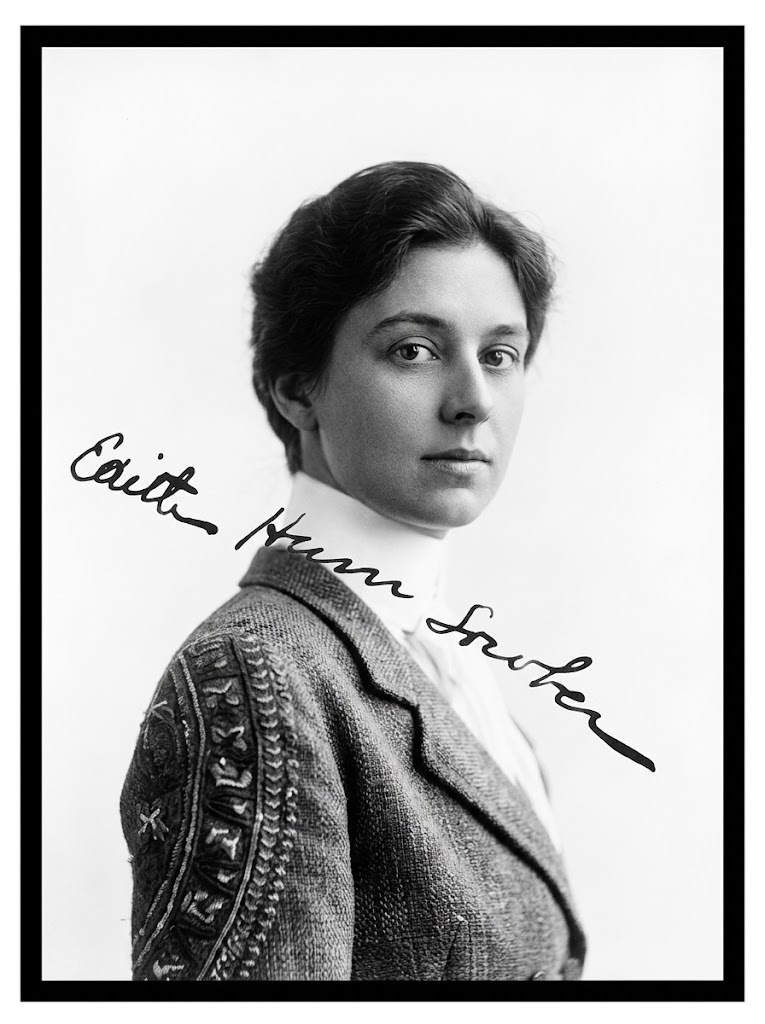 Edith Hunn Lowber (June 6, 1879 – March 22, 1934) was an American photographer, researcher, and traveling companion whose collaborative work
significantly influenced early twentieth-century art history and the documentation of medieval architecture.
Edith Hunn Lowber (June 6, 1879 – March 22, 1934) was an American photographer, researcher, and traveling companion whose collaborative work
significantly influenced early twentieth-century art history and the documentation of medieval architecture.
Born in Camden, Delaware, to farmer Jonathan H. Lowber and his wife, she grew up in Delaware before moving in with her sister, Bessie Jones, and
brother-in-law, George M. Jones, following her father's death. Described in historical passport applications as a tall woman with a distinctively dark,
freckled complexion, Lowber lived a life marked by personal independence, artistic collaboration, and extensive international travel alongside pioneering
female scholars.
In the late 1900s, Lowber formed a deep personal, creative, and romantic partnership with
Georgiana Goddard King, the founder and chair of the Department of Art History at Bryn Mawr College.
Moving within avant-garde feminist and intellectual circles, the pair frequently visited Bernard Berenson
in Florence, through whom they likely met author Vernon Lee and her partner
Kit Anstruther-Thomson. These encounters, along with Lee and Anstruther-Thomson's focus on the
experiential aspects of aesthetic response, subtly influenced the pair's artistic and written output. Around 1908, King presented Lowber with a handmade,
leather-bound volume of romantic poetry titled A First Book of Desire, dedicated to her with psalm-inspired verses. By 1916, Lowber was residing at
Yarrow East on the Bryn Mawr campus.
Between 1911 and 1925, King and Lowber embarked on numerous photographic expeditions across Europe, traversing remote areas of Spain, Portugal, and
France by train, oxcart, and donkey to document little-known Romanesque and Gothic architecture. Operating behind a camera provided them with agency and
protection from the public gaze, allowing them to gain official entry into cloistered religious institutions like the monastic house of Las Huelgas. In
1919, King organized a publishing partnership between Bryn Mawr College and the Hispanic Society of America to produce a series of small, portable
volumes on Spanish art. Designed to be held in one hand—resembling medieval books of hours—these volumes were specifically formatted to suit the small
prints that Lowber and King produced from their negatives, distinguishing them from the larger, formal surveys of contemporaries like Arthur Kingsley
Porter.
As a co-photographer, Lowber was instrumental in building an extensive visual corpus that captured medieval monuments, decorative details, and
landscapes. While the exact attribution of individual images can be complex due to their seamless collaboration, specific publications explicitly
credited Lowber's technical contributions. In King’s The Pre-Romanesque Churches of Spain (1924), eighteen photographic plates are directly attributed to
Lowber alongside thirty credited to King. Lowber also provided the frontispiece and numerous small detail photographs arranged across ninety-four plates
for King's Mudéjar (1927). Their shared body of work spanned archaeological documentation, Corot-like pictorialist scenes of daily life, and stark,
modernist compositions featuring sharp geometric shadows that evoked the Cubist works of Pablo Picasso and the haunting vistas of Giorgio de Chirico.
Lowber's most extensive artistic collaboration with King was a manuscript titled The Heart of Spain, an exploration of Spanish art, literature, and
landscape written between 1912 and 1926. Designed as an integrated, image-driven work where text and photography evolved together, King explicitly noted
in the author's preface that while she authored the text, credit for the photographs belonged to Lowber, calling the entire book the outcome of close
collaboration and mutual criticism. Though the manuscript remained unpublished during their lifetimes, it was eventually edited by Agnes Mongan and
published by Harvard University Press in 1941.
During the final decade of her life, Lowber became the primary traveling companion of M. Carey Thomas, the
famed suffragist and long-serving president of Bryn Mawr College. Beginning around 1925—ten years after the death of Thomas's long-term partner
Mary Elizabeth Garrett—Lowber and Thomas entered into a romantic relationship and traveled extensively
throughout Europe, Egypt, India, and the Middle East. Lowber maintained detailed travel diaries and financial records during these years, documenting
their joint experiences, including surviving an automobile accident in France in 1928. By 1930, Lowber developed a severe illness that Thomas identified
as radium poisoning, leading Thomas to arrange for her treatment at health spas and sanitaria across Arizona, Colorado, New Jersey, and southern France.
Lowber passed away on March 22, 1934, at age 54, while staying at Thomas's French villa, and her remains were interred at the Odd Fellows Cemetery in
Camden, Delaware.
Throughout her life, Lowber remained a central figure within pioneering LGBTQ academic and artistic networks. Her partnerships with both Georgiana
Goddard King and M. Carey Thomas reflect the historical tradition of same-sex domestic, romantic, and intellectual partnerships among educated women of
the early twentieth century. Lowber's personal diaries, travel records, checkbooks, and photograph collections—preserved in the Bryn Mawr College
Archives, the Library of Congress, and the Hispanic Society of America—continue to serve as vital documentation of early female art scholarship,
photographic innovation, and modern queer history.
References:
Other references:
- Madeline H. Caviness, "Seeking modernity through the Romanesque: G. G. King and E. H. Lowber behind a camera in Spain c. 1910-25," Journal of Art Historiography, No. 11 (December 2014).
- Georgiana Goddard King and Edith H. Lowber, The Heart of Spain, edited by Agnes Mongan (Cambridge, MA: Harvard University Press, 1941).
- Georgiana Goddard King, The Pre-Romanesque Churches of Spain, Bryn Mawr Notes and Monographs, Vol. VII (Bryn Mawr, PA / London / New York: Bryn Mawr College & Longmans, Green and Co., 1924).
- Georgiana Goddard King, Mudéjar, Bryn Mawr Notes and Monographs, Vol. VIII (Bryn Mawr, PA / London / New York: Bryn Mawr College & Longmans, Green and Co., 1927).
- Georgiana Goddard King, The Way of St. James, 3 vols. (New York: G. P. Putnam's Sons, 1920).
- M. Carey Thomas Personal Papers, Bryn Mawr College Archives (Microfilm edition, Reel 10: Volumes 170–200, 1926–1931, including the 1926 diary of Edith Lowber, travel diaries, account books, and checkbooks; Reel 11: Volumes 201–223, 1932–1935).
- Bryn Mawr College Photographic Collection, Special Collections, Bryn Mawr College Library (containing original prints, travel photos, and negative collections from the King-Lowber expeditions and M. Carey Thomas travel series).
- Hispanic Society of America Archives (New York), Photographic Archives (holding original glass plate negatives, prints, and official correspondence between Georgiana Goddard King, Edith Lowber, and Archer Milton Huntington).
- United States Federal Census Records (1880, 1900, 1910, 1920).
- United States Passport Applications, Department of State Records (Emergency and Standard Applications for Edith Hunn Lowber, 1916 and 1920s).
- Cemetery Records, Odd Fellows Cemetery, Camden, Kent County, Delaware, USA.
Support this project
This website is a passion project researched, developed, and funded entirely by me. If you find the content valuable and would like to help support the ongoing research and hosting costs, any contribution is deeply appreciated.
Thank you for keeping this independent resource alive!
My books on Amazon: Elisa Rolle's books
BACK TO HOME PAGE
